
Flerf comment of the day:
you think u can measure an angle from a curved baseline, youre maths skills must be so amazing u think 2 + 2 = 5.
The rationale behind the flerf chant that “the earth measures flat” is that altitude angles (also known as elevation angles) of celestial objects used in celestial navigation require a flat baseline. They claim that this flat baseline is the surface of the earth.
Inevitably, any evidence showing the earth’s curvature is dismissed and ignored because of this claim. However, anyone with a rudimentary understanding knows this is false:
The Altitude of the celestial body is, of course, the angular measure from the tangent plane of the observer to the celestial body, and is so designated on the diagram [ U.S. Naval Institute].
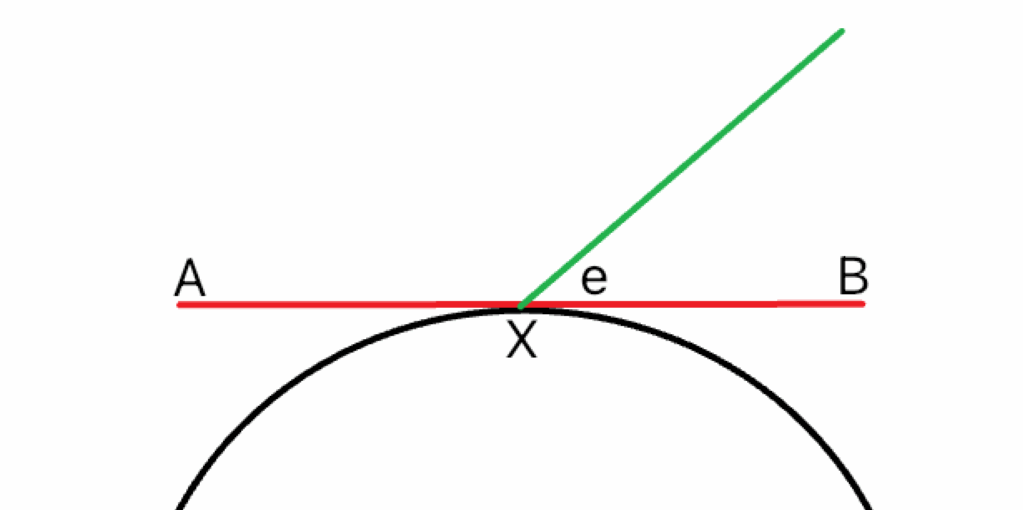
The diagram shows how an angle between a curve and a straight line is formed and measured. On the earth, the tangent is usually called the horizontal plane. It is not the curved surface of the earth as flerfs would have you believe.
So yes, you can measure an angle from a curved baseline. We’d be stuck if that was not the case. For example, the equator (running east – west) is a circle on the globe and on flat earth; it’s the path of the ground position of the Sun on the day of the equinoxes and makes a 90° angle with any line of longitude (running north – south).
To support their claim that elevation angles require a flat baseline, flerfs will cite examples of how trigonometry is used to determine the height of distant tall objects. In the example below, the observer, the base of the lamppost and the top of the lamppost form a right angled triangle.
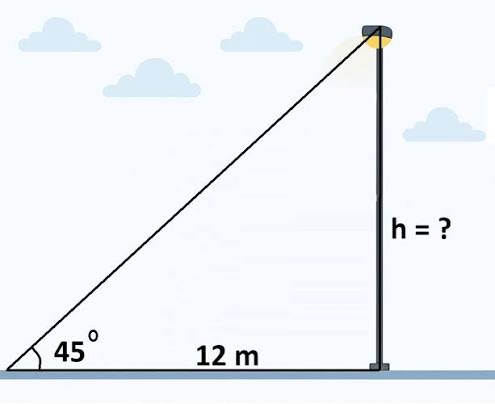
Knowing the length of one side and one of the angles, the height can easily be calculated using simple trigonometry. It would be harder to calculate if the curve of the Earth was included. With a radius of ~6,378 km, the curve of the earth over 12 m is less than 0.0002°. The difference is insignificant, even over longer distances.
That doesn’t stop flerfs claiming that measurements such as this prove that the Earth must be flat. Of course, they have to ignore the fact that long distance surveys have to account for earth curve if they are to be accurate.
Leave a Reply